Compostable Unbleached Pulp Salad Bowls – 750ml & 1000ml
€164.89 incl.VAT
Switch to sustainable packaging with our compostable salad bowls. Made from natural, unbleached plant pulp, these bowls are 100% biodegradable and perfect for cold or warm salads.
- Sizes: 750ml (24oz) & 1000ml (32oz)
- Material: Eco-friendly Unbleached Pulp
- Pack Size: 300 Bowls per Case
- Eco-Status: 100% Compostable & Biodegradable
Eco-Friendly Unbleached Pulp Salad Bowls – Sustainable Takeaway Solutions
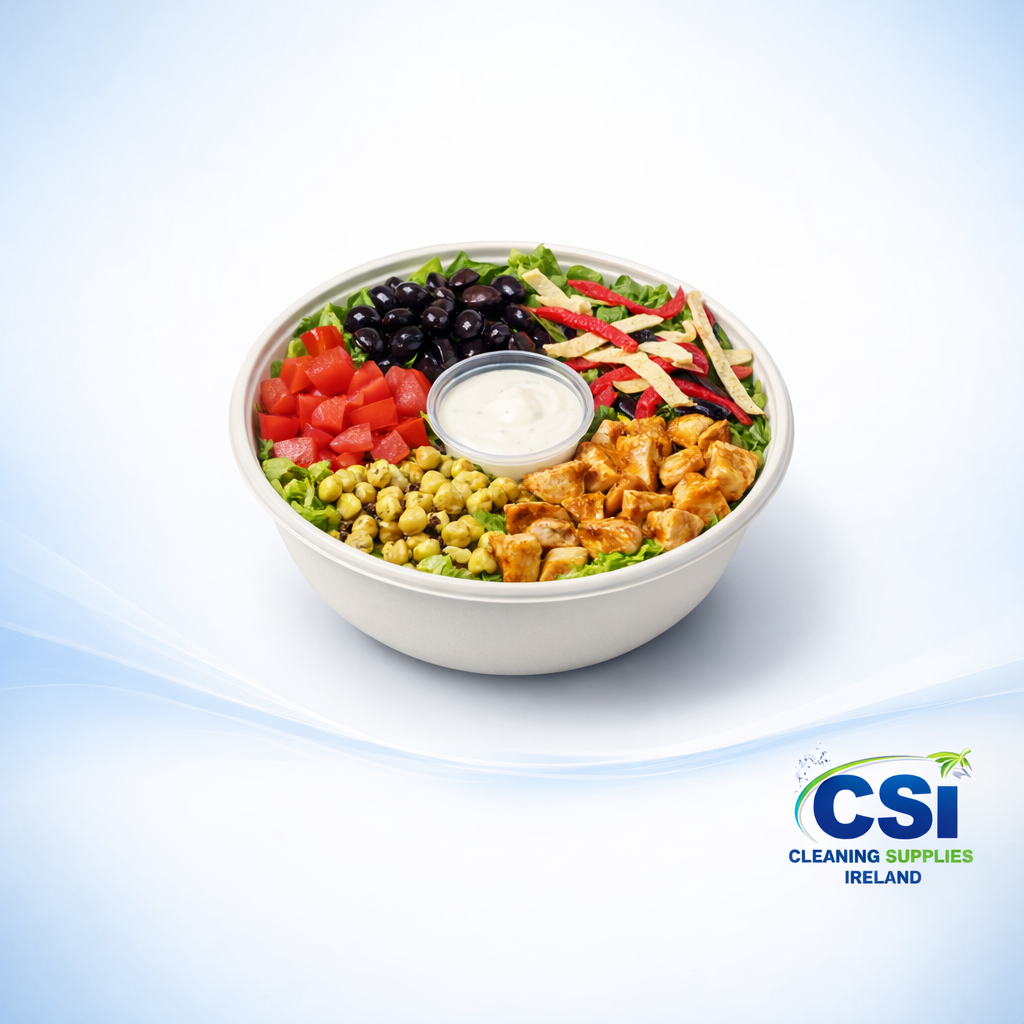
Our compostable salad bowls offer a premium, earth-friendly alternative to plastic and styrofoam containers. Crafted from high-quality unbleached plant pulp (bagasse), these bowls maintain a natural, rustic aesthetic that complements fresh, organic food offerings. Whether you are serving a light garden salad or a heavy grain bowl, these containers provide the strength and soak-resistance required for professional catering.
Available in two versatile sizes—750ml (24oz) and 1000ml (32oz)—these bowls are designed for modern food-to-go businesses, cafes, and festival caterers who want to reduce their environmental footprint without sacrificing performance.
Key Benefits
- 100% Compostable: Fully biodegradable within commercial composting facilities, leaving no toxic residue behind.
- Natural Unbleached Finish: No harsh chemicals or dyes are used, giving the bowls a clean, organic look that appeals to eco-conscious customers.
- Sturdy & Reliable: The dense pulp construction is naturally breathable yet resistant to oil and moisture, keeping salads crisp and fresh.
- Space-Efficient: Designed to be easily stackable, saving valuable storage space in busy commercial kitchens.
Versatile Sizing for Every Menu
- 750ml (24oz) Shallow Bowl: Ideal for side salads, fruit portions, or smaller lunch helpings.
- 1000ml (32oz) Bowl: The perfect choice for main course salads, poke bowls, or pasta dishes.
Product Specifications
| Material | Unbleached Plant Pulp (Bagasse) |
|---|---|
| Eco-Certification | 100% Compostable |
| Case Quantity | 300 Bowls |
| Temperature Range | Suitable for cold and warm foods |
FAQ
Are these bowls microwave safe?
Yes, unbleached pulp bowls are generally heat-resistant and can be used to briefly reheat food in a microwave.
Do these bowls come with lids?
Lids are typically sold separately to allow for different material choices (e.g., matching pulp lids or clear rPET lids). Please check our “Lids” category for compatible fits.
How should I dispose of these?
For the best environmental outcome, these should be disposed of in a brown (organic) waste bin for commercial composting.
| Weight | 6.5 kg |
|---|---|
| Dimensions | 45 × 35 × 38 cm |
Related products